
What Does a Parish Council's Own Policy Cover?
Almost every parish and town council in England and Wales holds an insurance package, usually bought as a bundle covering public liability, employers' liability, property, fidelity guarantee and sometimes legal expenses. The public liability section protects the council against claims arising from its own activities and its own land and buildings. That means the play area, the recreation ground, the war memorial and the council-run community centre are normally covered for the council's negligence, and so are events the council itself organises.
What it does not do, in most cases, is act as a blanket policy for every event that happens to take place on council land. This is the single biggest misunderstanding in village life. A volunteer group hiring the village green for a summer fair is not automatically insured by the parish council. The council's policy protects the council. Whether it also protects the people who book its land is a separate question with a separate answer, and the answer is frequently no.
Events the Council Runs Itself
Where the parish council is the organiser, cover is usually straightforward. Council-run events such as a Christmas lights switch-on, a jubilee celebration or a community picnic generally fall within the council's public liability policy, and volunteers working on the council's behalf are often covered as well. One published example, a Hampshire parish council on a Hiscox policy, states plainly that volunteers working for the council or its committees are covered by its insurance.
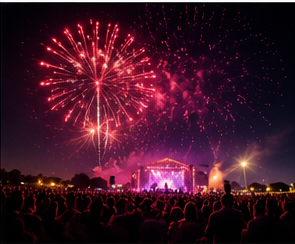
The same council page lists specific exclusions, including fireworks on parish land and public bonfire events, and says organisers must hold their own insurance to cover their events. Treat that as typical, not exceptional. Fireworks, bonfires, inflatables, funfair rides, amplified music and anything involving alcohol sales are the usual items that policies exclude or ask to be declared. Clerks should read the policy schedule before promising a committee that an event is covered, and should ask the insurer in writing when an activity is borderline.
Events Run by Other Groups on Council Land
When a scout group, church, school PTA, cricket club or a few enthusiastic residents want to use council land or a council hall, the council normally requires them to carry their own public liability insurance. Local authorities publish this openly. Bath and North East Somerset Council's parish events toolkit, for example, makes public liability insurance mandatory for small community events with a minimum of £5 million, and £5 million to £10 million for large ones. Street parties are the exception, where cover is optional but recommended and organisers without it must accept personal responsibility for any claims.
The practical consequence for organisers is a request for a copy of the certificate before the booking is confirmed. For clerks, it means building that check into the booking process, because an out-of-date or missing certificate is exactly the gap that turns a minor accident into a dispute over who pays.
Never confirm a booking on council land or in a council hall without seeing an in-date public liability certificate showing the limit, the policy dates and the activity covered. File a copy with the booking record. It takes two minutes and removes most of the council's exposure.
How Much Public Liability Cover Is Enough?
The market standard for community events is £5 million, and many councils, halls and landowners now ask for £10 million. The higher figure is not a sign that a serious claim is likely. It reflects the fact that a single serious injury claim with long-term care costs can be expensive, and that the premium difference between the two limits is usually small. If you are the organiser, buy the limit the landowner specifies rather than the minimum you can get away with.
Who Is Personally Responsible?
A parish council is a corporate body, so claims are normally made against the council, not against individual councillors or the clerk. The risk to individuals arises where the council has not done what it should: no risk assessment, no check on contractors, no certificate on file. In that situation a claim is harder to defend, and councillors may face questions about decisions taken. Many council packages include a legal expenses section, and councillors' and officers' liability is worth confirming where it is not already in the package. If you sit on a committee that organises events, our guide to directors' and officers' liability for event committees explains the position in more detail.
What Else Should the Council or Organiser Check?
- Employers' liability. Required by law if the council or organiser has employees, at a minimum of £5 million. Pay attention to how volunteers are treated, because many policies extend cover to them and some do not. See our guide to employers' liability for events.
- Contractors and traders. Ask caterers, bouncy castle suppliers, entertainers and stallholders for their own public liability certificates. Our guides to inflatable hire and stallholder insurance cover what to expect.
- Equipment and property. A marquee, stage or PA system hired in or owned by the council may need separate cover. The council's property section may not extend to items away from its premises.
- Cancellation. Council policies do not normally cover lost income or deposits when an event is cancelled for weather or other causes. If sunk costs matter, look at event cancellation insurance and weather cover.
- Alcohol and licensing. A Temporary Event Notice is a licensing matter, not an insurance one, but the policy should confirm that alcohol sales are covered. See alcohol liability for events.
Who Needs What: A Quick Reference
| Situation | Whose insurance responds? | Action |
|---|---|---|
| Council organises an event itself | Council's public liability, usually including volunteers | Check policy for excluded activities |
| Community group hires the green or hall | The group's own public liability | Obtain certificate before confirming |
| Fireworks or public bonfire | Usually excluded from council policy | Specialist cover required |
| Traders and entertainers on site | Their own public liability | Collect certificates in advance |
| Street party on a closed road | Optional, but recommended | Organiser accepts personal responsibility if uninsured |
What Does It Cost?
For an organiser hiring council land, one-off public liability for a small community event is inexpensive. Specialist providers advertise single-event policies from around £66 and annual multi-event cover from around £174, with higher limits, larger crowds and added activities pushing the price up. Compared with a venue booking fee or the cost of a single hired-in marquee, it is a small line in the budget. For a council, the annual package is priced on the precept, the buildings and the activities it runs, so the useful action is not shopping around for a lower number but making sure the schedule reflects the events actually being held.
The Bottom Line
A parish or town council's policy protects the council, not everyone who borrows its land. Council-run events and their volunteers are normally covered, but fireworks, bonfires and some other activities are commonly excluded, and outside groups should be asked for their own £5 million to £10 million public liability certificate before any booking is confirmed. Read the schedule, ask the insurer when in doubt, and keep the paperwork. That is most of what stands between a well-run village event and an expensive argument.
Organising a community event?
Explore our guides to public liability, village fetes, street parties and everything else UK volunteers run each year.
Browse all guides